The Calibrated Method is a system for diagnosing behavior problems and designing for them. Run repeatedly across engagements, it has produced a recurring set of named solutions — each one targeted at a specific kind of behavior problem we keep seeing. The list below is not exhaustive, and it is not a menu. These are the patterns the work itself has produced.
Competitive Landscape Tools
In-field readiness for HCP conversations.
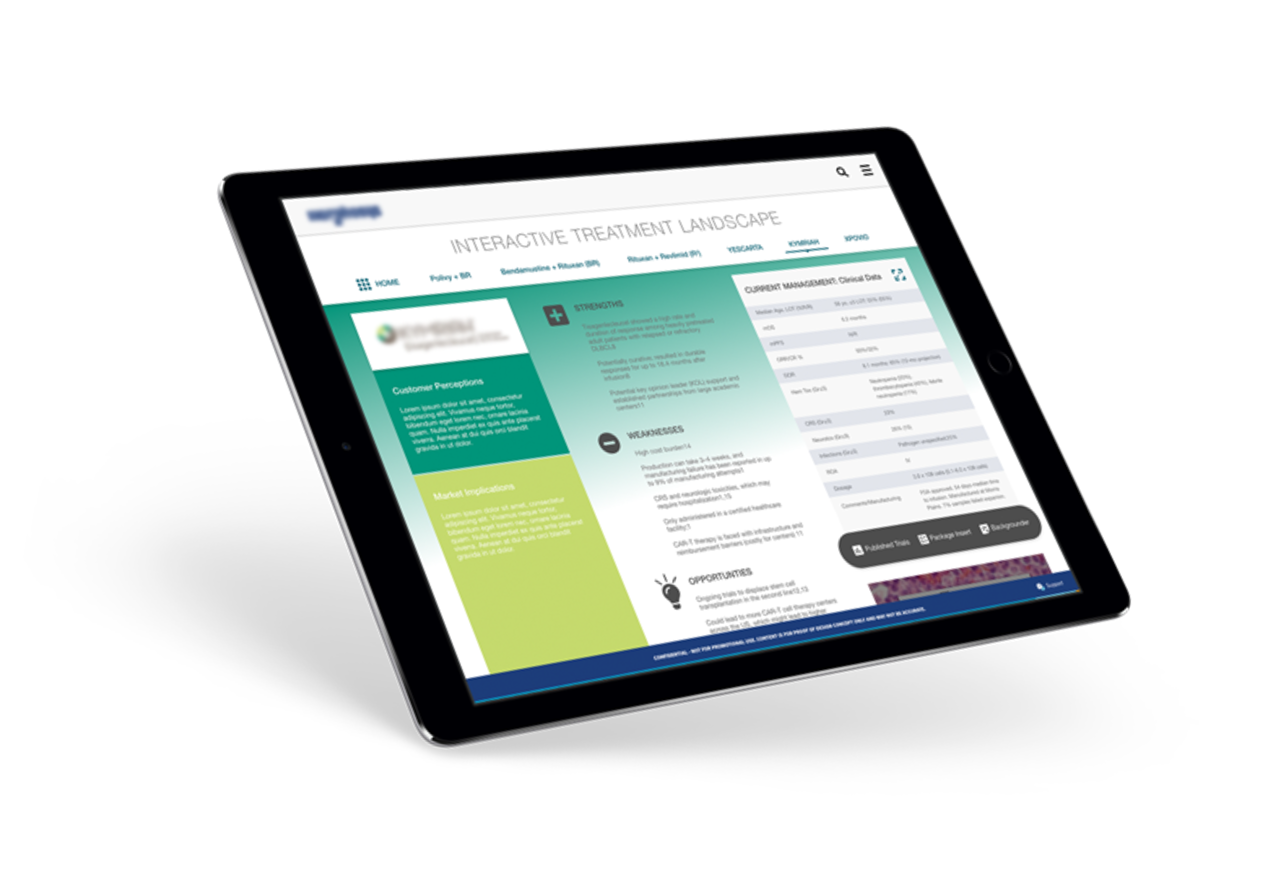
An in-field reference that brings a defined set of competitor products into one place, structured for fast comparison. Users can toggle, multi-select, and filter to surface exactly what they need before an HCP discussion.
Communication Skills Playbooks
Field-conversation behavior — how reps actually engage with HCPs.
A working playbook for field conversations, anchored in specific communication behaviors. Not a script; a structured set of moves, frames, and language patterns the team can practice and apply. Built around the conversations the team is actually having, with attention to what works under pressure and what does not.
Digital Scenarios
Practicing real-world decisions in a safe environment.
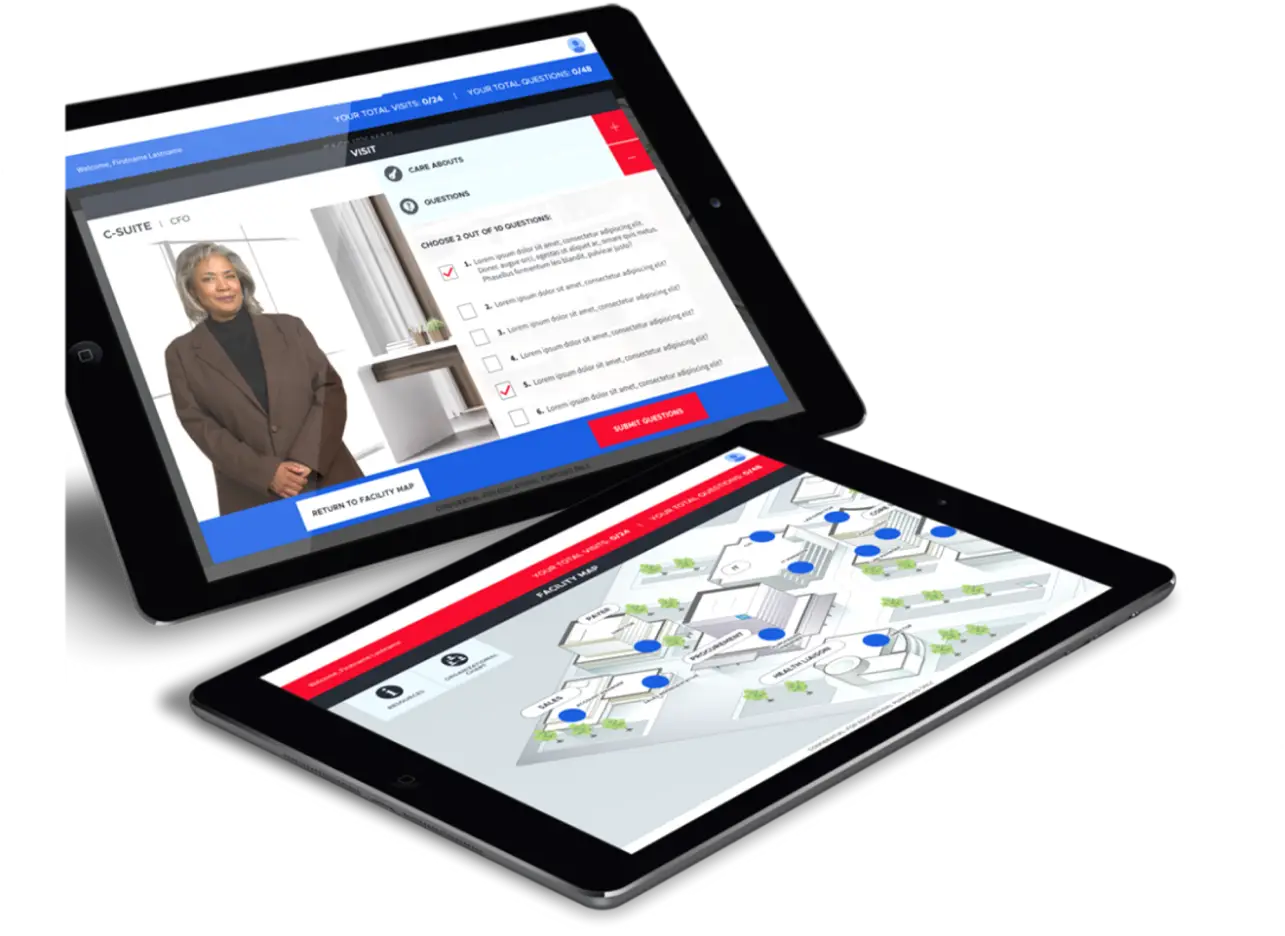
Behavior-based decision trees that put users into realistic scenarios. Choices branch; consequences play out; users see what their choices led to. Designed for rehearsal of behavior, not just exposure to content.
Next Level Questioning
Surfacing what genuinely needs to be addressed before offering a solution.
A structured approach to questioning in field conversations, helping reps identify what actually needs acknowledgment and what calls for a solution. Trains the discipline of slowing down to surface the real question before answering it.
Patient Journeys
Changing how HCPs think about the decisions they make along a patient’s pathway.
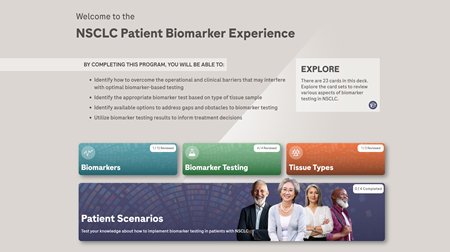
Case-based journeys that walk HCPs through realistic patient scenarios with decision points. The NSCLC version walks HCPs through four patient journeys with decision points designed to change how they think about ordering biomarker tests.
Case-based Assessments
Diagnostic accuracy against a defined clinical-grade standard.
A structured assessment in which the learner is tested on a defined set of cases against a defined threshold. The cases are real, the threshold is the clinical standard, and the assessment is where training ends and performance begins.
Biomarker Tracing Tool
Diagnostic accuracy on a known interpretive barrier.
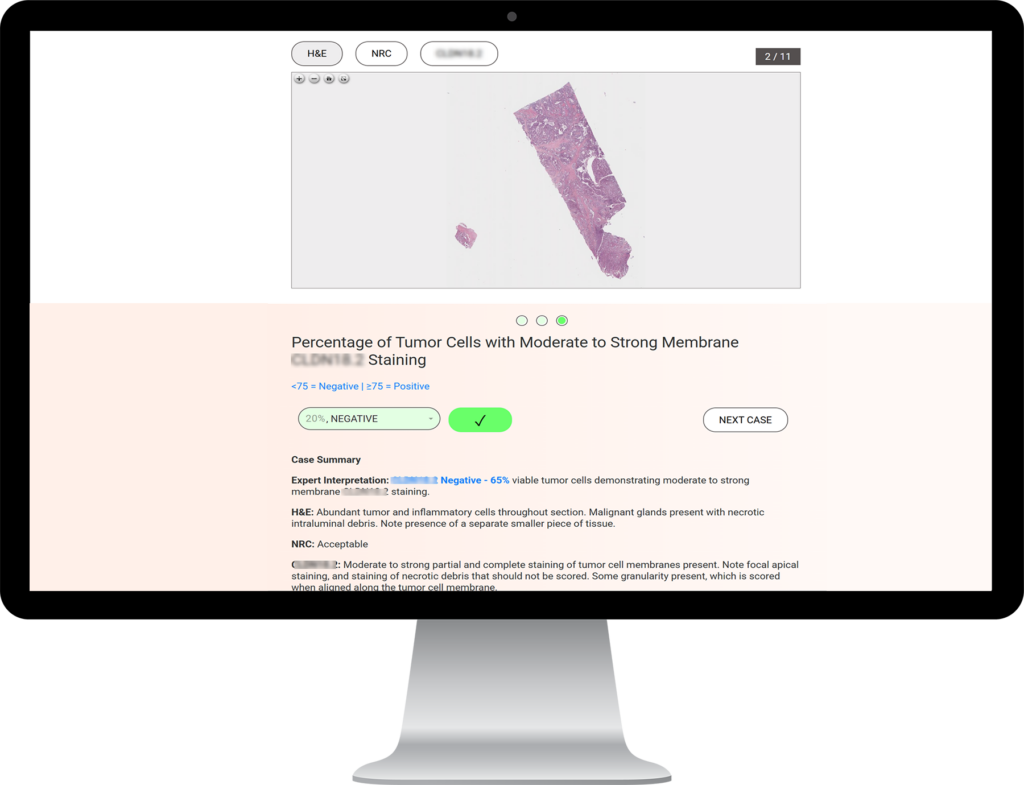
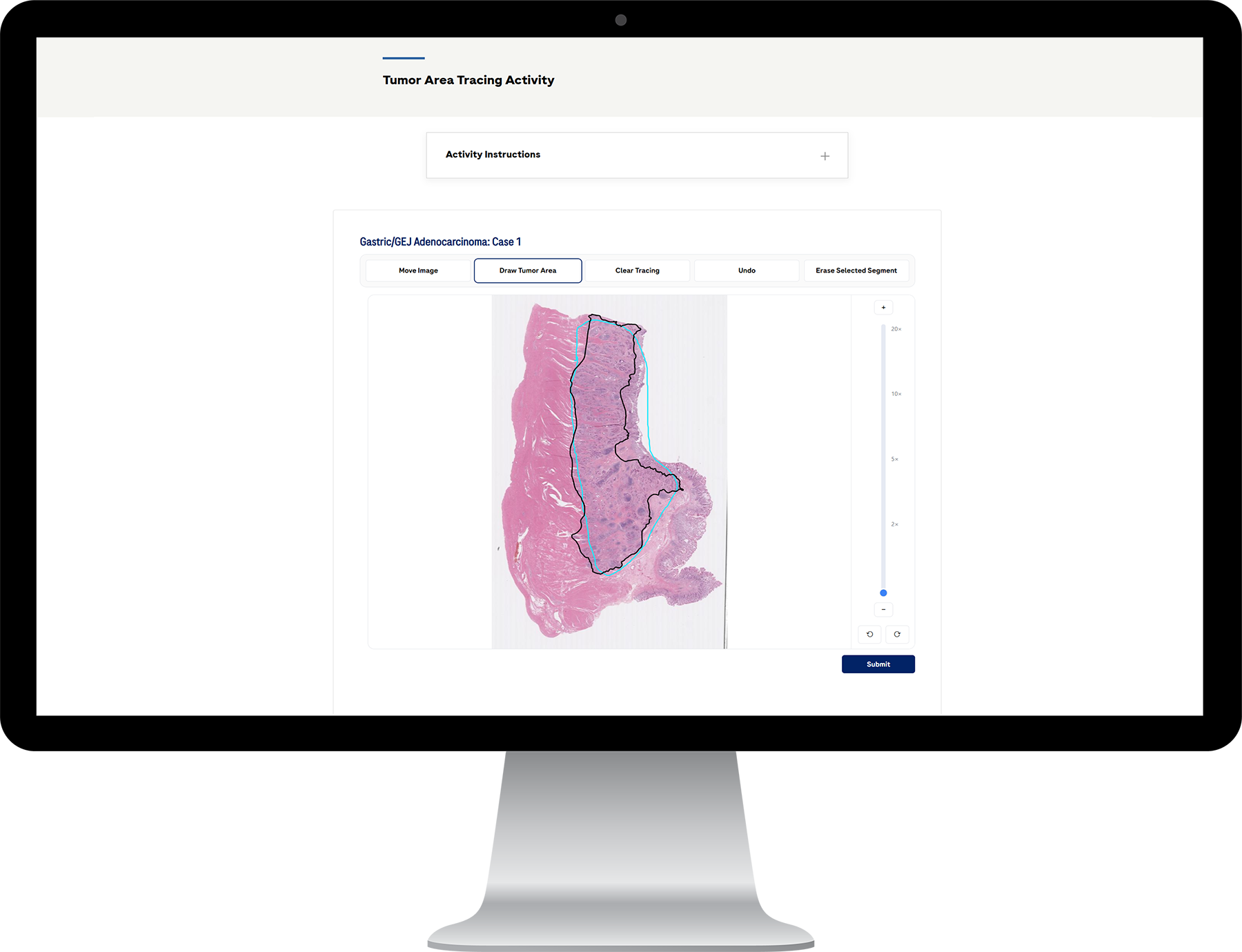
An interactive tool where pathologists trace tumors on whole slide images for select biomarkers. They submit; the expert answer overlays their trace. Supervised practice with expert calibration — the visual-pathology equivalent of guided performance.
Animated Tutorial — Digital Pathology Paradigm Shift
Conceptual reframing — shifting how a field thinks about a category.
An animated tutorial supporting a genuine paradigm shift in digital pathology — addressing not a task but a category of thinking. Narrative explanation structured to move how the field conceptualizes digital pathology in its own work.
A NOTE ON THIS LIST
Engagements rarely produce one of these in isolation. The integrated package is usually a combination, chosen for the behaviors the engagement is built around — a Patient Journey, a case-based assessment, and a coaching toolkit; or a Competitive Landscape Tool with Communication Skills work and Digital Scenarios. The Method is what decides which combination is right. This list is what the combinations are made from.
CONTACT
Start a conversation.
We work best with teams who already have a sense of what is not working and what they want to change. If that is where you are, send us a note. Tell us roughly what you are facing; we will read it, and one of the principals will reply.
A principal reads everything that comes in here and replies within two working days. If the fit feels right, the next step is a conversation — not a sales call.